


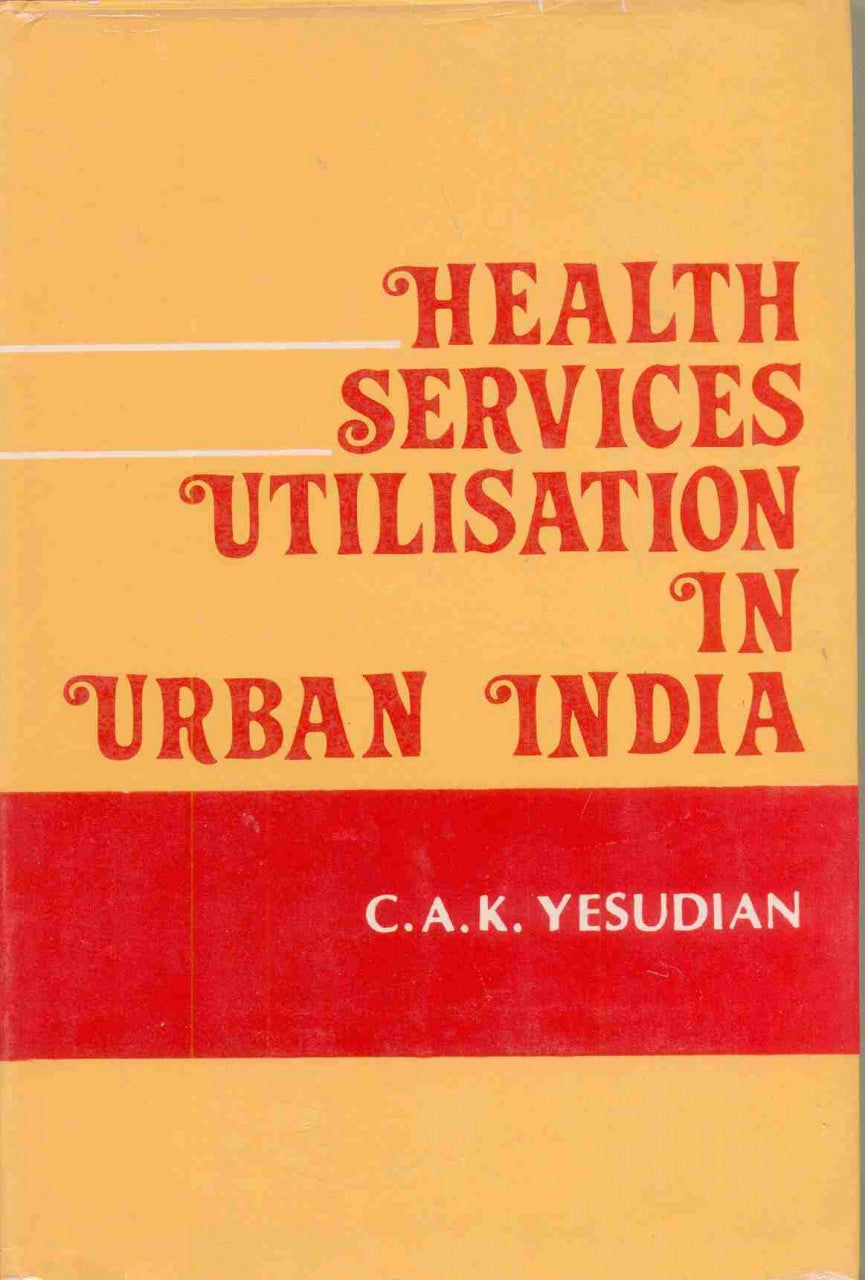
Health Services Utilization in Urban India
Regular price
Rs. 170.00
The book highlights the role of social inequality in the utilisation of health services. The differential socio-economic status and the life styles emerging out of it create differential health status among different social classes. Further, their differential educational achievements produce differential knowledge of health service needs. All these factors mould the utilisation patterns of health services of different social classes. The lower social classes are found to have greater health needs, but they are in a disadvantageous position to consume adequate health services. The author suggests an integrated development programme for the poor to narrow down social inequality as well as to reduce the health needs of the poor. At the same time a comprehensive health care scheme is conceived to provide adequate quantity of health services to the poor.
Dr. C.A.K. Yesudian (b. 1950) obtained the Ph.D. Degree in the field of health care utilisation from the Tata Institute of Social Sciences. He conducted research in the field of urban health services, urban poverty, urban social tension and hospital management. He also conducted several workshops, and training programmes at the national and international level in the field of primary health care and hospital management. He attended several conferences, seminars and workshops and presented papers in the field of primary health care and hospital management. He is currently head of the Unit for Extra Mural Studies at the Tata Institute of Social Sciences in Bombay and is in-charge of the Diploma in Hospital Administration Programme.
Guaranteed Safe Checkout
